
AI Mixing vs Manual Mixing: the real difference in 2026
AI mixing tools can now balance levels, apply EQ, and set dynamics in seconds. Manual mixing gives you complete creative control over every parameter. Here is an honest comparison of both approaches for professional music production.
The answer isn't one or the other. The best producers in 2026 use AI mixing as a starting point and make creative decisions manually. Flowtonik is built for exactly that workflow.
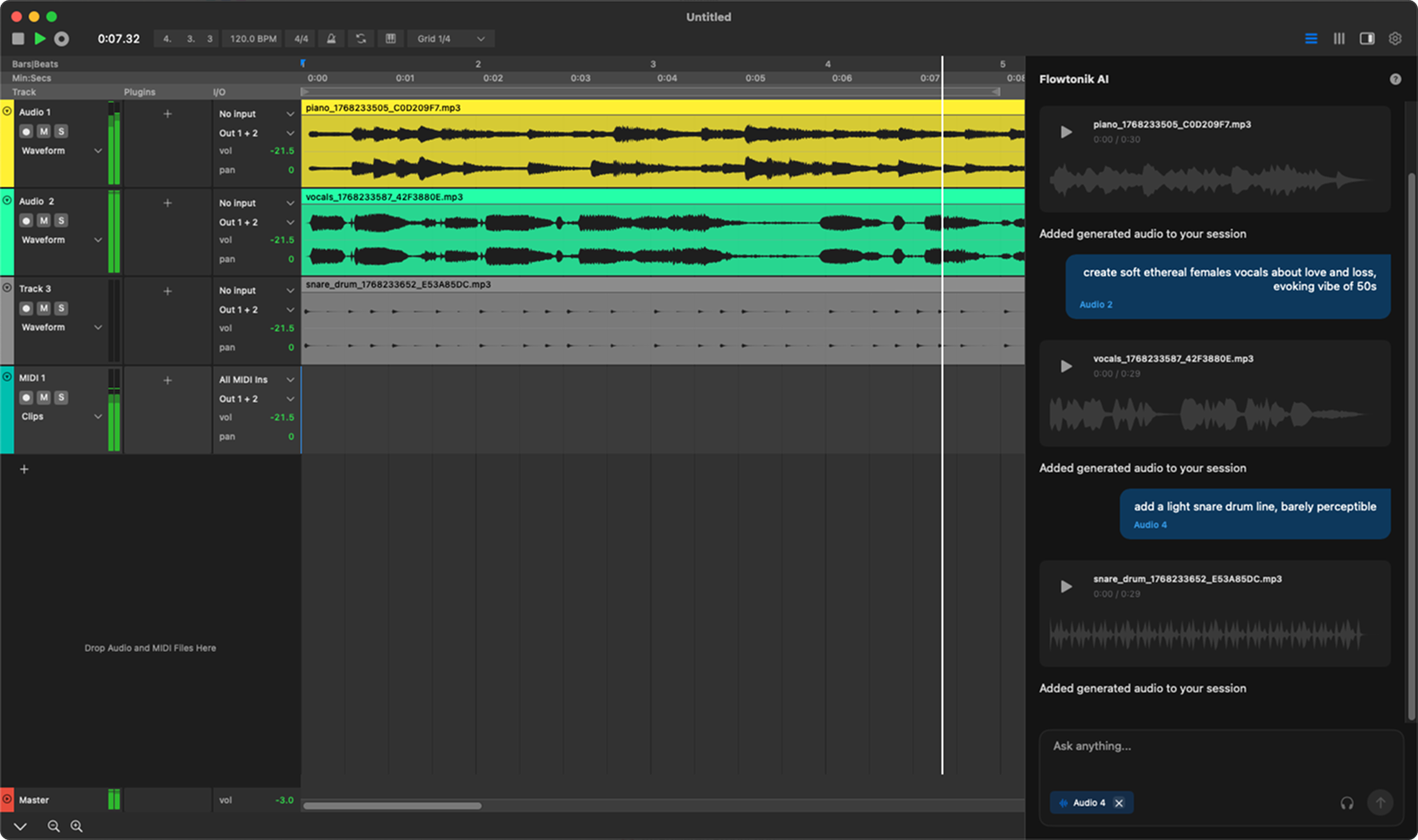
Side-by-side comparison
When AI mixing works best
AI mixing excels at the technical foundation. Level balancing, frequency cleanup, and basic dynamics can be handled in seconds rather than hours, freeing you to focus on creative decisions.
When manual mixing works best
Manual mixing is irreplaceable when creative vision drives every decision. When you need a specific emotional quality or artistic treatment that can't be described in words, manual mixing is the way.
The best approach: AI + manual
Most professional producers in 2026 don't choose one or the other. They use AI to handle the technical grunt work — level balancing, basic EQ, initial dynamics — and then make creative decisions manually. Flowtonik is built for exactly this hybrid workflow.
1. AI starting point
Let AI balance your levels, clean up frequencies, and set initial dynamics. This takes seconds instead of hours.
2. Creative refinement
Make manual adjustments for artistic decisions — add character, shape the emotional arc, dial in your signature sound.
3. Conversational tweaks
Use Flowtonik's conversational AI to make quick adjustments: "make the vocals brighter" or "add more punch to the kick."
Explore Flowtonik features
More comparisons
Flowtonik vs Logic Pro
Compare AI-native production with Apple's professional DAW.
Flowtonik vs Ableton Live
AI-native meets clip-based workflow for music production.
Flowtonik vs Suno
AI DAW for producers vs AI music generator for everyone.
Flowtonik vs LANDR
AI-native DAW vs AI mastering and distribution platform.
